
Work with nature, not against it
Permaculture as Stewardship: Designing a Food Forest That Feeds Itself
Permaculture is not a garden style — it's a design ethic. How layered, perennial food forests get easier to maintain the longer they run, and why the land is always teaching if you're taking notes.
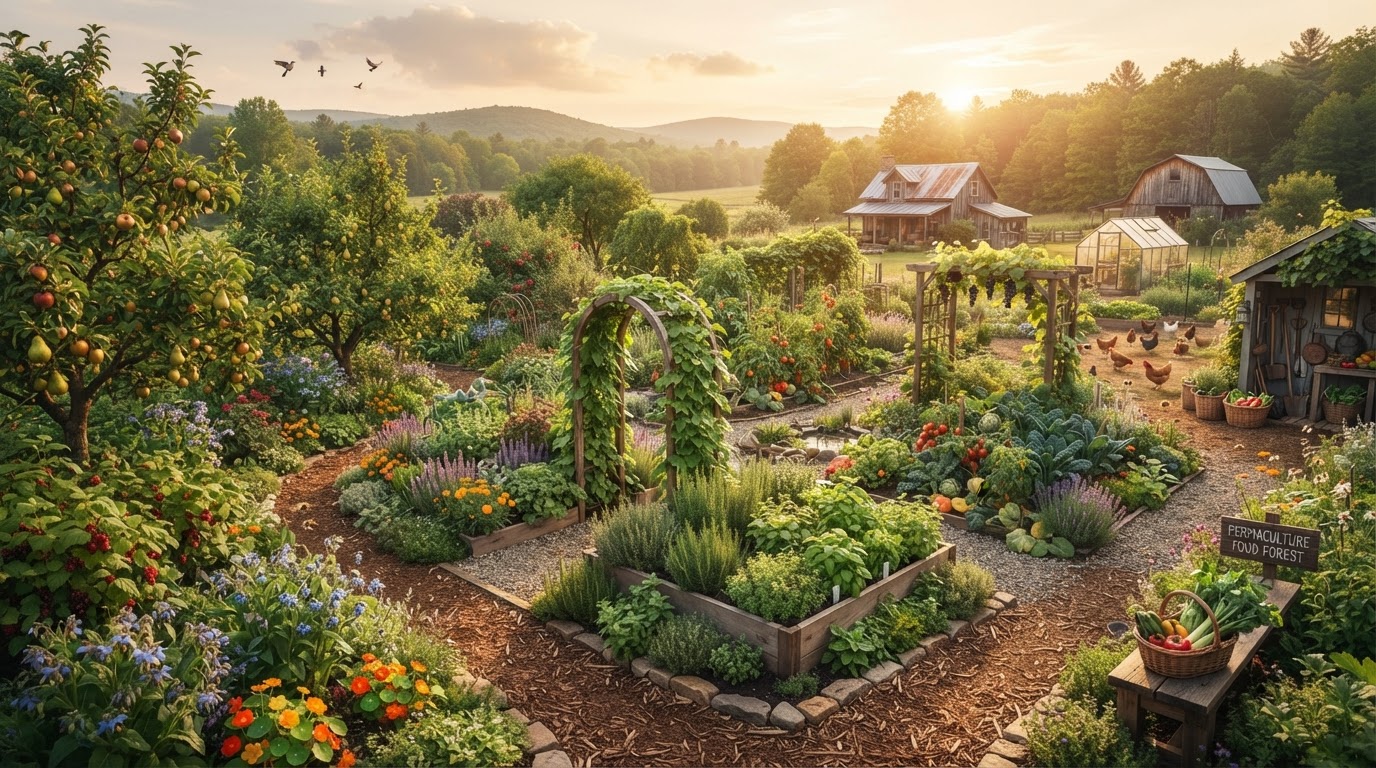
Permaculture is not a garden style; it is a design ethic. The word was coined to mean 'permanent agriculture,' but the more honest framing is that it is a way of designing systems that get easier to maintain the longer they run. The opposite of the modern farm, which demands more inputs every year to produce the same yield. A food forest, done well, feeds itself before it feeds you.
The first principle is observation before intervention. A year of watching how water moves across a patch of ground, where the sun sits in December, what wants to grow there already, saves a decade of fighting the site. Most failed homesteads fail because the owner imposed a plan on land they had not yet read. The land is always teaching; the question is whether you are taking notes.
Then stack functions. Every element should do at least three jobs. A fruit tree feeds you, shades the understory, drops mulch, hosts pollinators, and breaks up the soil with its roots. A chicken clears pests, fertilizes, turns compost, and lays eggs. The discipline is to stop thinking in monocultures — one plant, one purpose — and start thinking in relationships. A food forest is a community of plants, not a collection of them.
The spiritual parallel is plain enough that I will not belabor it. Stewardship is the oldest framing we have for the relationship between a person and the ground, and it cuts both ways: the land is entrusted to your care, and you are formed by the work of caring for it. Dominion was given as a responsibility, not a license. The permaculture mind treats the soil as a deposit to be returned richer than it was received.
This is part of why the overland rig matters to me: it is the mobile version of the same ethic. A self-reliant basecamp that can reach land I am considering, sit on it long enough to read it, and eventually anchor a homestead that works with its site instead of against it. Build the vessel, read the land, design for permanence. The food forest is the destination; the rig is the scout.
Andrew Johnson
Polymath, adventurer, and creator documenting the intersection of fitness, faith, wilderness expeditions, the ambulance overland build, and high-agency thinking across economics, history, and technology.
Follow the journeyMore from The Dispatch
All articles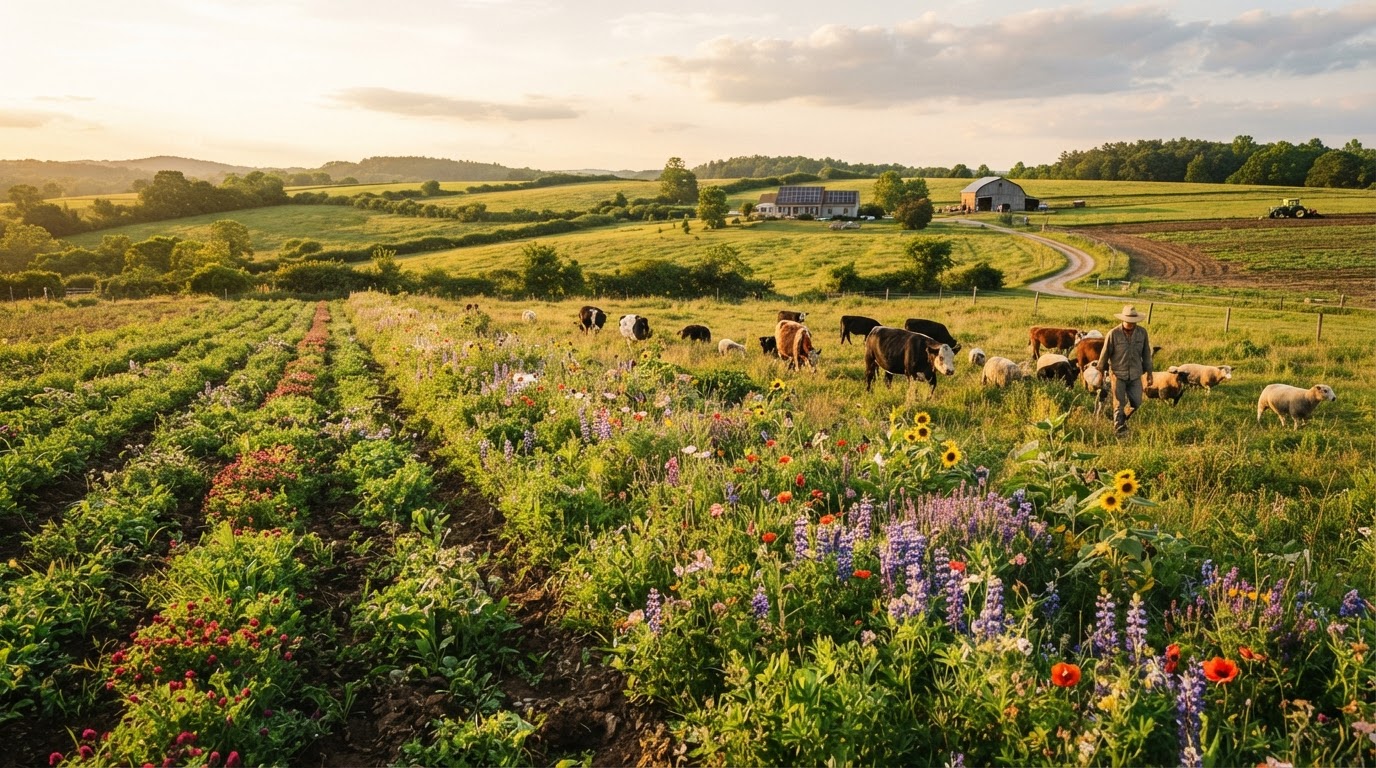 Homestead & Land Stewardship
Regenerative Farming: Healing the Soil That Heals You
The thin layer of living soil that grows everything we eat is thinner than it was a century ago. Regenerative farming is the practice of reversing that ledger — building topsoil faster than it is lost.
 Homestead & Land Stewardship
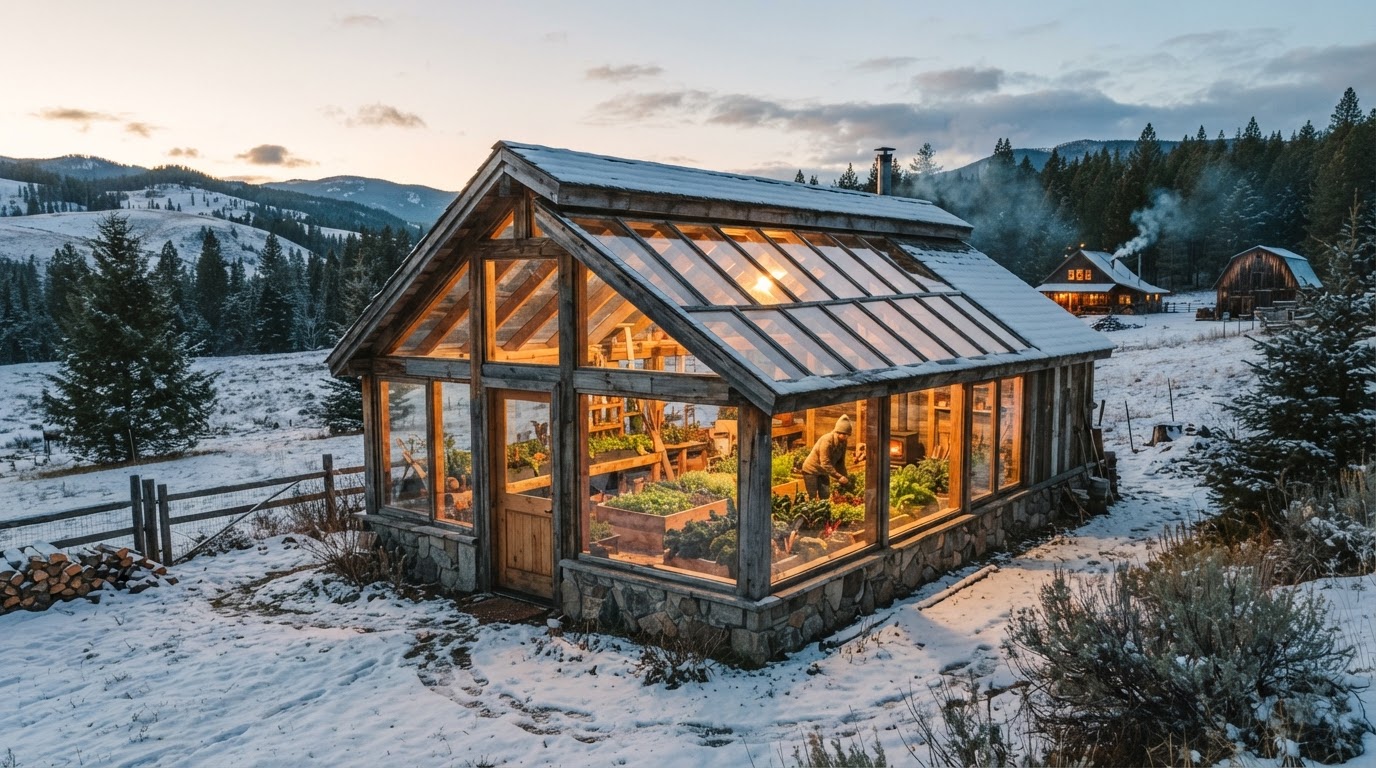
The Passive Solar Greenhouse: Four-Season Growing Off the Grid
A passive solar greenhouse isn't a glass box with a heater — it's a building that uses the sun, orientation, and thermal mass to hold a growing climate through the coldest months without a fuel bill.
 Homestead & Land Stewardship
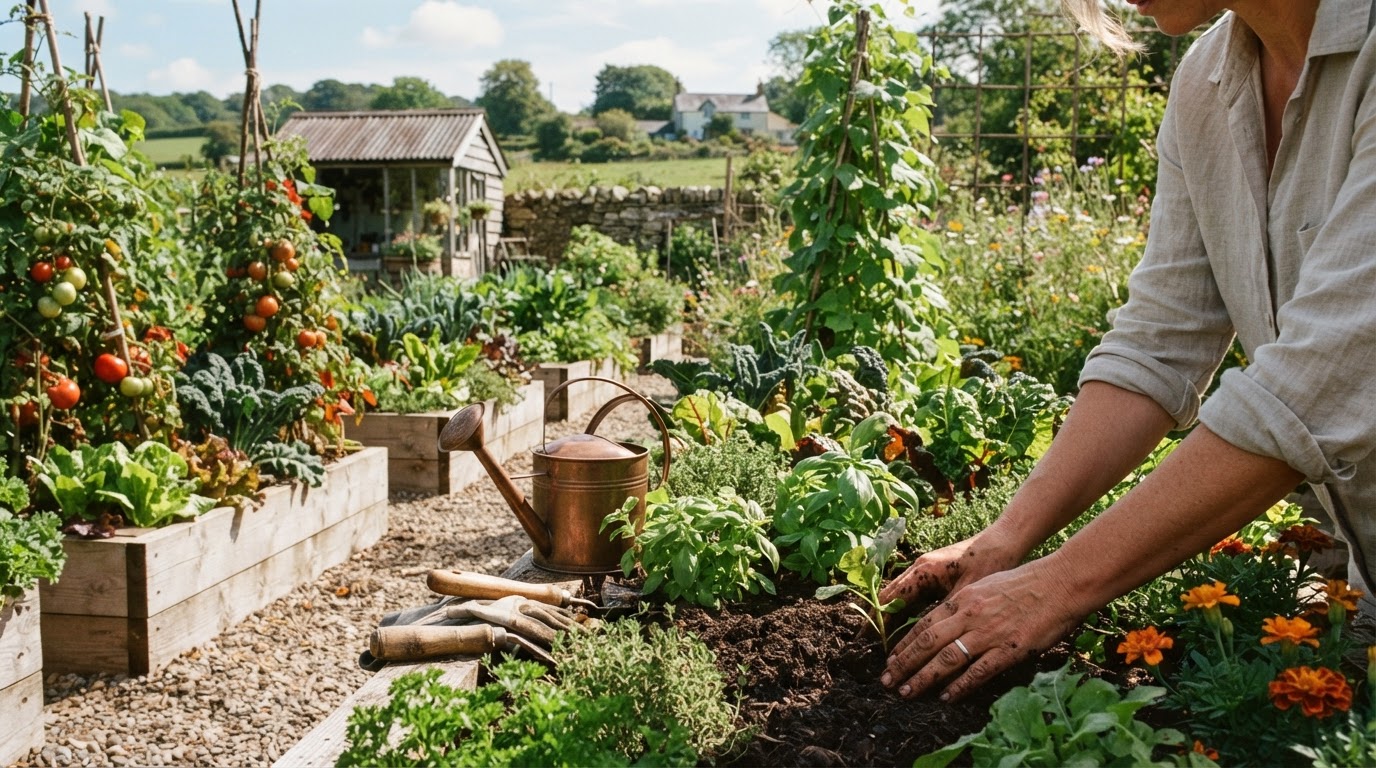
The Kitchen Garden: Abundance Starts in a Raised Bed
If you want to grow food and never have, start with one raised bed — not the Pinterest homestead. The biggest mistake new gardeners make is scaling before they've learned to grow anything.